Key Takeaways
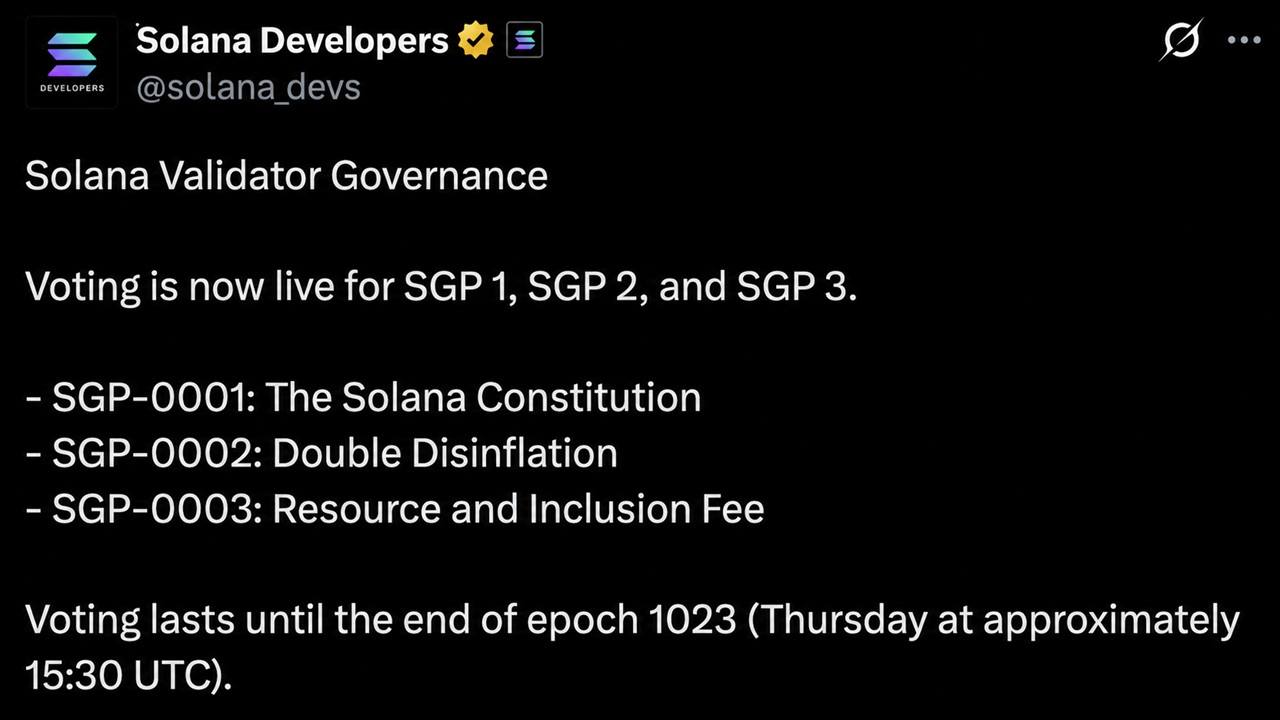
- Solana opened onchain voting on three governance proposals on August 22, 2026, running through epoch 1023.
- SIMD-0550 could cut future Solana issuance by 18.9 million tokens over six years if it passes.
- Solana Company, Nasdaq-listed as HSDT, backed the constitution but voted against faster disinflation and fee changes.
Three Proposals, One Vote
The Solana network continued on its path of backend proactiveness this week, opening its first governance vote to validators yesterday, bundling three Solana Governance Proposals, or SGPs. These include:
- SGP-0001, a Solana Constitution that formalizes a governance framework weighting voting power by economic stake while letting underlying token holders override the validators managing their delegated SOL
- SGP-0002, which would double the network’s annual disinflation rate
- SGP-0003, a rework of how transaction fees get burned. Voting runs until the end of epoch 1023, expected around 15:30 UTC on August 27
The two tokenomics proposals arrive as separate technical implementations, SIMD-0550 and SIMD-0553, filed under Solana’s Improvement Document process in early June. SIMD-0550 would double Solana’s annual disinflation rate from 15% to 30%, pulling the network’s terminal inflation rate of 1.5% roughly three years closer, while trimming projected future issuance by an estimated 18.9 million SOL over six years.
SIMD-0553 replaces today’s fixed 5,000-lamport transaction fee, currently split between a burn and a payout to the block leader, with a smaller 2,500-lamport inclusion fee paid entirely to leaders and a separate, usage-based resource fee that gets burned in full.
The burn proposal’s real-world impact is already showing up onchain as Solana currently burns roughly 648 SOL a day under the existing fee structure; under SIMD-0553’s terminal rate, daily burns could climb to between 7,500 and 9,000 SOL, more than a tenfold jump, once network activity ramps up.
Solana Company Splits Its Vote
Not every validator is on board with these developments. Solana Company, a Nasdaq-listed SOL treasury and staking firm trading as HSDT, announced its voting positions on August 21, backing SGP-0001 while opposing both SGP-0002 and SGP-0003.
Chairman and CEO Joseph Chee said the objection is about timing rather than the proposals’ underlying goals, arguing that institutions “make decisions based on consistent, predictable structures” and need economic rules they can model across several years before Solana reshuffles its issuance and fee schedule during its very first governance cycle.
The disinflation and fee proposals needed to clear a 15% staked-SOL signaling threshold just to reach a formal vote, a bar they passed with validators Helius and Jupiter alone contributing roughly 16 million and 12.47 million SOL in support, respectively.
Interesting Week Ahead for Solana Believers
If SGP-0002 and SGP-0003 pass, the changes would move Solana further down a path already being watched by outside analysts. Bitcoin.com News reviewed Solana’s tokenomics trajectory recently and found that combining slower issuance with heavier fee burns could push Solana’s annual supply growth from about 3.695% today toward 1.1% by 2031, a level that would put it below gold’s roughly 1.8% annual supply growth.
SIMD-0550 does most of that work on its own, while SIMD-0553’s burn contribution stays modest relative to total issuance unless network activity, and the fees that come with it, rise substantially.
Validators now have until roughly 15:30 UTC on August 27 to weigh in, and a rejection of SGP-0002 or SGP-0003 would not affect SGP-0001, since each proposal is being voted on independently.