Key Takeaways
- Bitcoin shot above $85,500 on Wednesday following lower-than-expected August PCE inflation data.
- Intraday volatility led to $55 million in short bets being liquidated within four hours.
- Analysts and chartists like Ted Pillows project a potential pull-back into the high $70,000s before a rally.
PCE Data Triggers Intraday Volatility
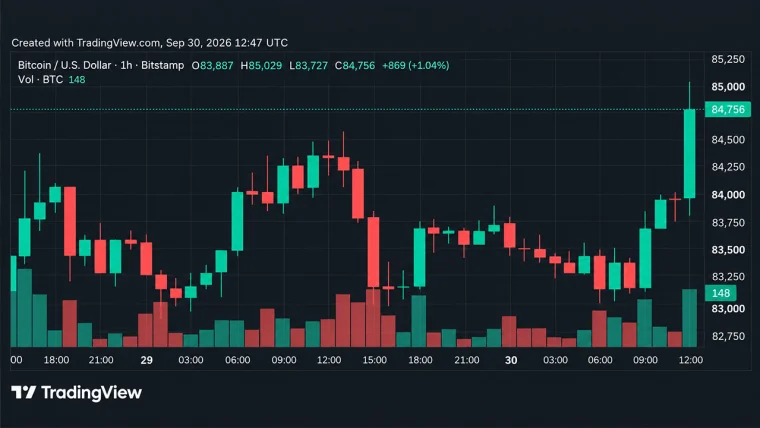
Bitcoin’s price briefly spiked to $85,500 on Wednesday before a sell-off nearly erased the gains, leaving the cryptocurrency marginally higher just hours before September comes to a close. The rally appeared to have been sparked by the release of U.S. inflation data, which showed slower-than-expected price increases in August.
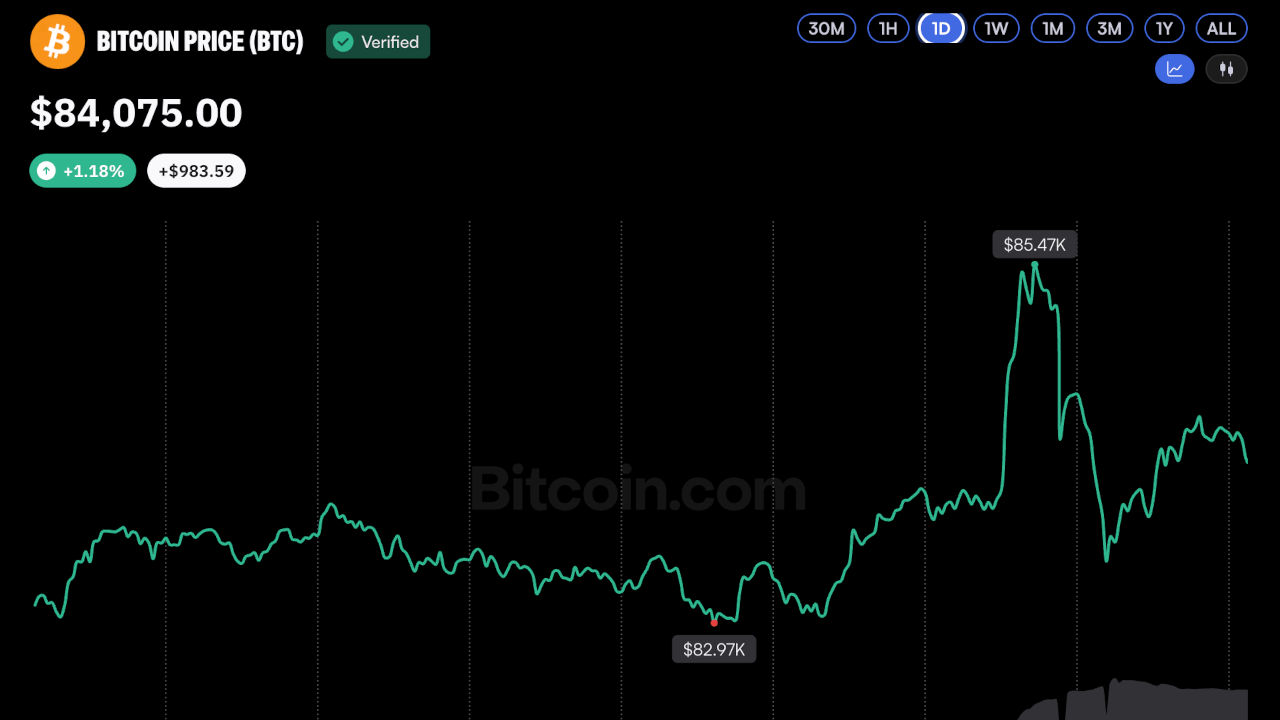
As shown on the daily chart, before its morning surge, bitcoin’s price fluctuated in the $83,000 to $83,500 range, continuing a pattern that emerged following its plunge to $82,555 on Monday. While it surpassed the $83,500 resistance a few times between Tuesday afternoon and the early hours of Sept. 30, bearish pressure dragged it back below the threshold each time.
Moments before the personal consumption expenditures (PCE) data release, bitcoin reclaimed $83,500, reaching $83,700 around 8:20 a.m. EST. According to Bitstamp data, bitcoin then spiked to a daily peak of $85,600 less than an hour later, only for the price to tumble to $84,350 by 10:35 a.m.
As of this writing, Bitcoin remains above the $84,000 mark, showing a 1.3% rise on the day. The increase ensured bitcoin entered the final hours of the month with a 7.3% gain in September and a 37% gain for the third quarter.
In the derivatives market, bitcoin’s volatility surrounding the PCE release triggered significant liquidations of leveraged positions. According to Coinglass data, the sharp price fluctuations led to the liquidation of $55 million in short bets in four hours, compared with $27 million in long bets.
Market Impact and Technical Scenarios
Despite a recent rate hike of 25 basis points, many analysts and prediction market bettors wager that the Federal Reserve will raise rates again. This sentiment was echoed by Sal Guatieri, a senior economist at BMO Capital Markets.
“The less-than-feared price data for August may buy the Fed time to await more data and pass on October 28, but still-elevated inflation and a resilient consumer and economy point to another rate hike by year-end,” Guatieri said.
A second rate hike would not only put Federal Reserve Chair Kevin Warsh on a collision course with the Trump administration, but it would also cap the upside potential of risk assets like bitcoin.
Meanwhile, some chart analysts, including Ted Pillows, project a further price drop before the next leg up. In a post on X, Pillows shared charts supporting why such price action is in the best interest of Bitcoin.
“This could be a possible scenario for Bitcoin,” Pillows argued. “The fractal looks very similar to early 2023, when BTC had a sharp correction after confirming the cycle bottom. This time, we could see a drop into the high $70,000s before the next leg up.”