Key Takeaways
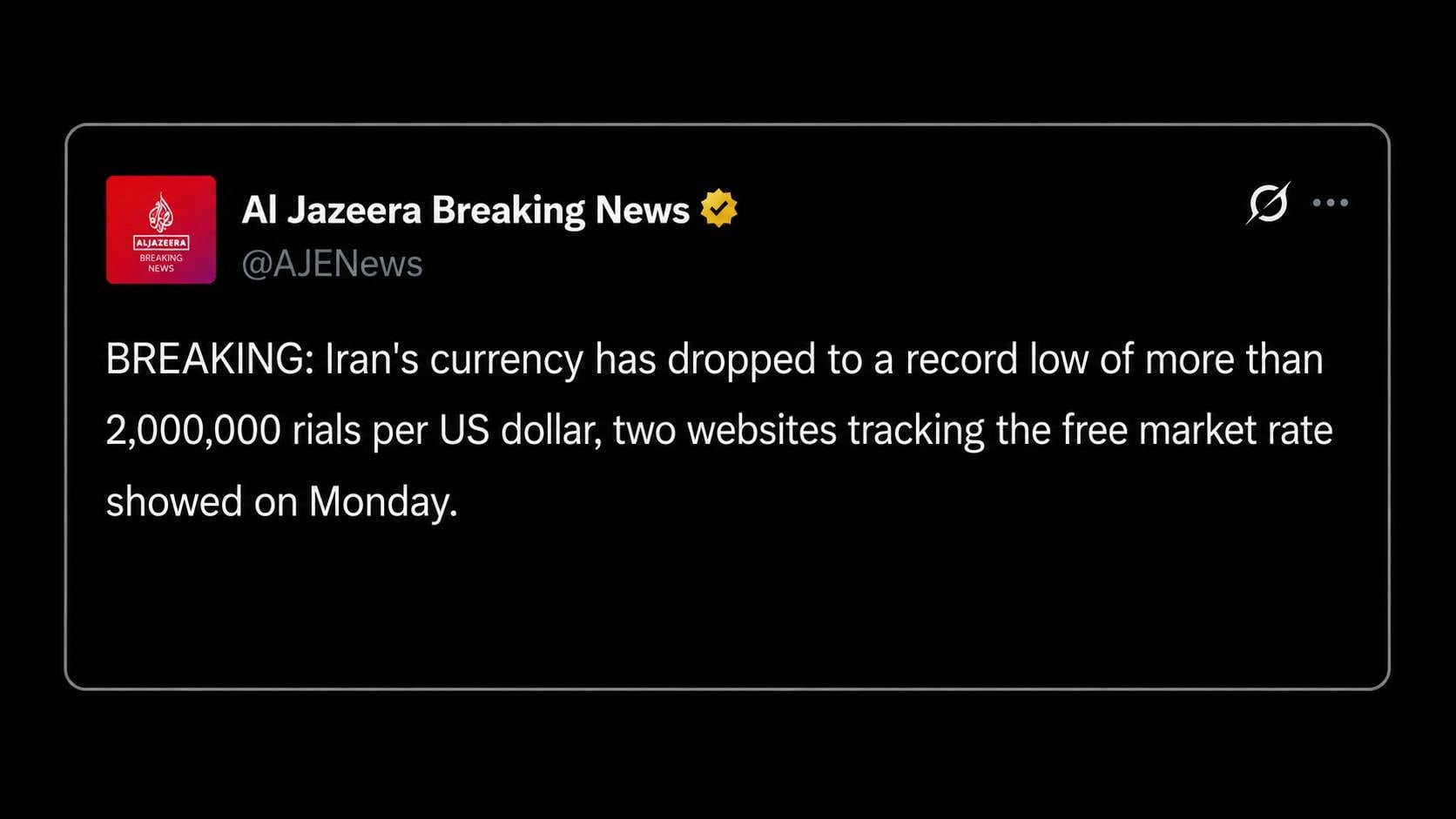
- Iran’s rial hit a record 2.02 million per dollar on Aug. 24, amid new U.S. sanctions.
- The IRGC reportedly controls 65% of Iran’s bitcoin mining capacity via state-linked farms.
- Trump’s new sanctions name digital assets as a target for the first time, per Treasury.
A Record-Low Rial and a New Sanctions Wave
Iran’s open-market exchange rate slid to roughly 2.02 million rials per dollar earlier this week, down from 1.53 million during Q1 this year. The slide came the same week the Trump administration launched Operation Economic Outcast, a sweeping sanctions package first announced on August 19 that added more than 60 entities to the Treasury’s blacklist.
Most notably, he named digital assets as a sanctionable sector for the first time alongside technology, gold, aviation and shipping.
Treasury Secretary Scott Bessent said the goal is to force Iran’s state-run Bank Melli to go “shuttered and dark” or lose dollar access entirely, and warned that secondary sanctions on Iran’s trading partners could follow within weeks. The International Monetary Fund now projects Iran’s annual inflation will average 68.9% in 2026, with the economy contracting 5.4%, and rice and beef prices already sharply higher since the pressure intensified.
The IRGC’s Bitcoin Mining Machine
None of this is new to Iran’s crypto sector, which has spent years building a workaround. To elaborate, Tehran legalized bitcoin mining back in 2019, letting licensed operators tap industrial electricity priced at roughly $0.004 per kilowatt-hour in exchange for selling their mined coins to the central bank.
State-affiliated farms linked to the Islamic Revolutionary Guard Corps now control an estimated 65% of that mining capacity, and Iran-based miners have accounted for somewhere between 3% and 7% of global bitcoin hashrate since 2019, producing coins worth an estimated $1.35 billion to $3.15 billion at various points along the way.
Layered on top of mining, Iran’s broader crypto ecosystem reached $7.78 billion in value last year, with Chainalysis estimating IRGC-linked wallet addresses alone received more than $3 billion in the fourth quarter of 2025, while Elliptic separately found Iran’s central bank had built up at least $507 million in USDT to help prop up the rial.
Washington’s Crypto Crackdown so Far
Washington has been chipping away at this network for months, as evidenced by the Treasury’s Office of Foreign Assets Control sanctioning Nobitex, Wallex, Bitpin and Ramzinex in June.
Nobitex alone processed more than half of Iran’s digital-asset inflows and helped the central bank move hundreds of millions of dollars in stablecoins while enabling regime insiders to reach international exchanges.
That action followed a nearly $500 million seizure of Iran-linked crypto assets by the Treasury in April after a cyberattack that drained more than $90 million from Nobitex itself (during mid-2025), forcing the central bank to reroute its stablecoin flows across multiple blockchains to keep the scheme running.
TRM Labs separately found Iran’s total crypto flows actually cooled to $3.7 billion in 2025 as the Nobitex hack, Tether freezes and mounting geopolitical risk eroded trust in the system.
Can Iran Survive the Pressure?
Bessent has floated secondary sanctions on countries that keep trading with Tehran, which would squeeze the same intermediaries Iran’s crypto network relies on to convert stablecoins into usable cash. Iran’s mining operations are also exposed on a more basic level, i.e. the country’s power grid is already strained, and further military escalation or blackout-driven rationing could do more to shut down IRGC-linked mining farms than sanctions lists ever have.
Simply put, the rial’s slide and the fresh sanctions package are just the latest chapter in a fight the desk has tracked for years, one where every crackdown on Iran’s crypto lifeline has so far been met with a new workaround.