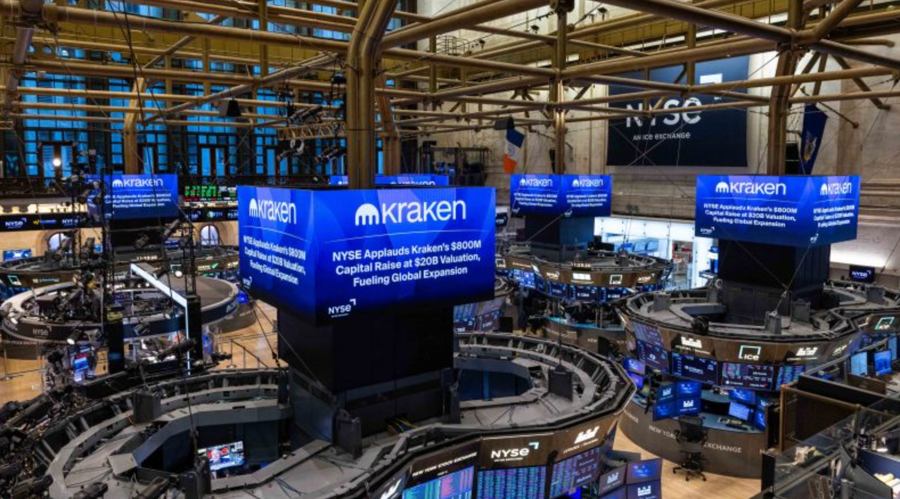
Kraken’s US
public listing may now slip into 2027, just over a month after the
cryptocurrency exchange’s co-CEO Arjun Sethi publicly reaffirmed that its
confidential filing remained on track.
Bloomberg reported
on Friday, citing a person familiar with the matter, that the
Payward-operated exchange is now eyeing a 2027 debut. The same person said
Kraken had also cut around 150 staff as it rolled out artificial intelligence
tools across its operations. Kraken has not commented publicly on the report.
The shift
puts the company back in the same holding pattern it has occupied since last
November, when it first submitted a confidential draft Form S-1 with the
Securities and Exchange Commission.
Sethi used
a panel at the Semafor World Economy event in Washington in mid-April to confirm
Kraken’s IPO plans remained intact, even after reports a month earlier
suggested the company had paused its market debut.
That same
event coincided with a $200 million investment from
Deutsche Börse Group
at a $13.3 billion valuation. That figure was already 33% below the $20 billion
peak Kraken hit in late 2025, after raising $800 million from investors
including Jane Street and Citadel Securities.
The April
messaging was clear: the IPO had not been shelved. One month later, the public
timeline now stretches well into 2027, with no Kraken executive yet confirming
the date.
The pattern
matches an earlier sequence. Kraken filed confidentially with the SEC in
November 2025, only
to pause those plans in March as Bitcoin and other digital assets
sold off and crypto-firm valuations softened.
Strong Numbers, Weaker
Listing Window
What makes
the latest slip notable is the company’s underlying performance, which would
not normally suggest a strained listing path. Kraken’s 2025 revenue jumped 33% to $2.2
billion, adjusted
EBITDA reached $530.6 million and total transaction volume hit $2 trillion.
Funded accounts climbed 50% year-on-year to 5.7 million.
The
exchange has also been spending aggressively. Recent deals include futures
broker NinjaTrader, tokenization platform Backed Finance, token management firm
Magna and, in April, a Bitnomial acquisition for up to $550
million that gave
Kraken full CFTC licensing for US derivatives.
Its Cyprus
arm now holds a MiFID II license, and the company has partnered with Nasdaq and
Deutsche Börse on tokenized equities frameworks. Tokenized
stocks on its platform have already passed $5 billion in volume since launch.
Even with
that performance, the listing backdrop has stayed difficult. Several listed
crypto exchanges reported first-quarter losses, and earlier 2026 listings,
including BitGo, have traded unevenly after their debuts. Revolut similarly
pushed its long-discussed IPO into 2028 last month.
AI Cuts Provide the Cost
Backdrop
The
Bloomberg report ties Kraken’s 150-person reduction to wider AI deployment
across the business. For a company that has raised more than $1 billion in
primary capital across the past year, the headcount move is small in absolute
terms, and the same source said there are no further cuts planned.
The cost
adjustment still fits a broader sector pattern. Coinbase reduced its workforce
by 14%, or about 700 people, on May 5, citing both AI adoption and softer market
conditions. Block,
the payments and crypto firm led by Jack Dorsey, cut roughly 4,000 jobs in
February.
Gemini,
Crypto.com and crypto data company Dune have also reduced headcount, each
pointing to AI-driven efficiency gains. Finance Magnates earlier noted that AI has become the default narrative in broker and exchange layoff
disclosures.
Total
crypto-sector job cuts have now passed 5,000 for the year. Whether Kraken’s
2027 target holds will likely depend on where Bitcoin and the broader
digital-asset market sit by the time the SEC filing becomes effective.
For now,
Sethi’s April assurance has given way to a fresh slip, with the company yet to
speak on the record about when its long-discussed listing will actually happen.
Kraken’s US
public listing may now slip into 2027, just over a month after the
cryptocurrency exchange’s co-CEO Arjun Sethi publicly reaffirmed that its
confidential filing remained on track.
Bloomberg reported
on Friday, citing a person familiar with the matter, that the
Payward-operated exchange is now eyeing a 2027 debut. The same person said
Kraken had also cut around 150 staff as it rolled out artificial intelligence
tools across its operations. Kraken has not commented publicly on the report.
The shift
puts the company back in the same holding pattern it has occupied since last
November, when it first submitted a confidential draft Form S-1 with the
Securities and Exchange Commission.
Sethi used
a panel at the Semafor World Economy event in Washington in mid-April to confirm
Kraken’s IPO plans remained intact, even after reports a month earlier
suggested the company had paused its market debut.
That same
event coincided with a $200 million investment from
Deutsche Börse Group
at a $13.3 billion valuation. That figure was already 33% below the $20 billion
peak Kraken hit in late 2025, after raising $800 million from investors
including Jane Street and Citadel Securities.
The April
messaging was clear: the IPO had not been shelved. One month later, the public
timeline now stretches well into 2027, with no Kraken executive yet confirming
the date.
The pattern
matches an earlier sequence. Kraken filed confidentially with the SEC in
November 2025, only
to pause those plans in March as Bitcoin and other digital assets
sold off and crypto-firm valuations softened.
Strong Numbers, Weaker
Listing Window
What makes
the latest slip notable is the company’s underlying performance, which would
not normally suggest a strained listing path. Kraken’s 2025 revenue jumped 33% to $2.2
billion, adjusted
EBITDA reached $530.6 million and total transaction volume hit $2 trillion.
Funded accounts climbed 50% year-on-year to 5.7 million.
The
exchange has also been spending aggressively. Recent deals include futures
broker NinjaTrader, tokenization platform Backed Finance, token management firm
Magna and, in April, a Bitnomial acquisition for up to $550
million that gave
Kraken full CFTC licensing for US derivatives.
Its Cyprus
arm now holds a MiFID II license, and the company has partnered with Nasdaq and
Deutsche Börse on tokenized equities frameworks. Tokenized
stocks on its platform have already passed $5 billion in volume since launch.
Even with
that performance, the listing backdrop has stayed difficult. Several listed
crypto exchanges reported first-quarter losses, and earlier 2026 listings,
including BitGo, have traded unevenly after their debuts. Revolut similarly
pushed its long-discussed IPO into 2028 last month.
AI Cuts Provide the Cost
Backdrop
The
Bloomberg report ties Kraken’s 150-person reduction to wider AI deployment
across the business. For a company that has raised more than $1 billion in
primary capital across the past year, the headcount move is small in absolute
terms, and the same source said there are no further cuts planned.
The cost
adjustment still fits a broader sector pattern. Coinbase reduced its workforce
by 14%, or about 700 people, on May 5, citing both AI adoption and softer market
conditions. Block,
the payments and crypto firm led by Jack Dorsey, cut roughly 4,000 jobs in
February.
Gemini,
Crypto.com and crypto data company Dune have also reduced headcount, each
pointing to AI-driven efficiency gains. Finance Magnates earlier noted that AI has become the default narrative in broker and exchange layoff
disclosures.
Total
crypto-sector job cuts have now passed 5,000 for the year. Whether Kraken’s
2027 target holds will likely depend on where Bitcoin and the broader
digital-asset market sit by the time the SEC filing becomes effective.
For now,
Sethi’s April assurance has given way to a fresh slip, with the company yet to
speak on the record about when its long-discussed listing will actually happen.