Key Takeaways
- XRP support covers buying, selling, holding, deposits, and withdrawals.
- Paxos cited XRP holdings across more than 8.1 million wallets.
- Each financial business determines its own customer-facing offering.
XRP Gains Buying, Selling, and Transfer Support
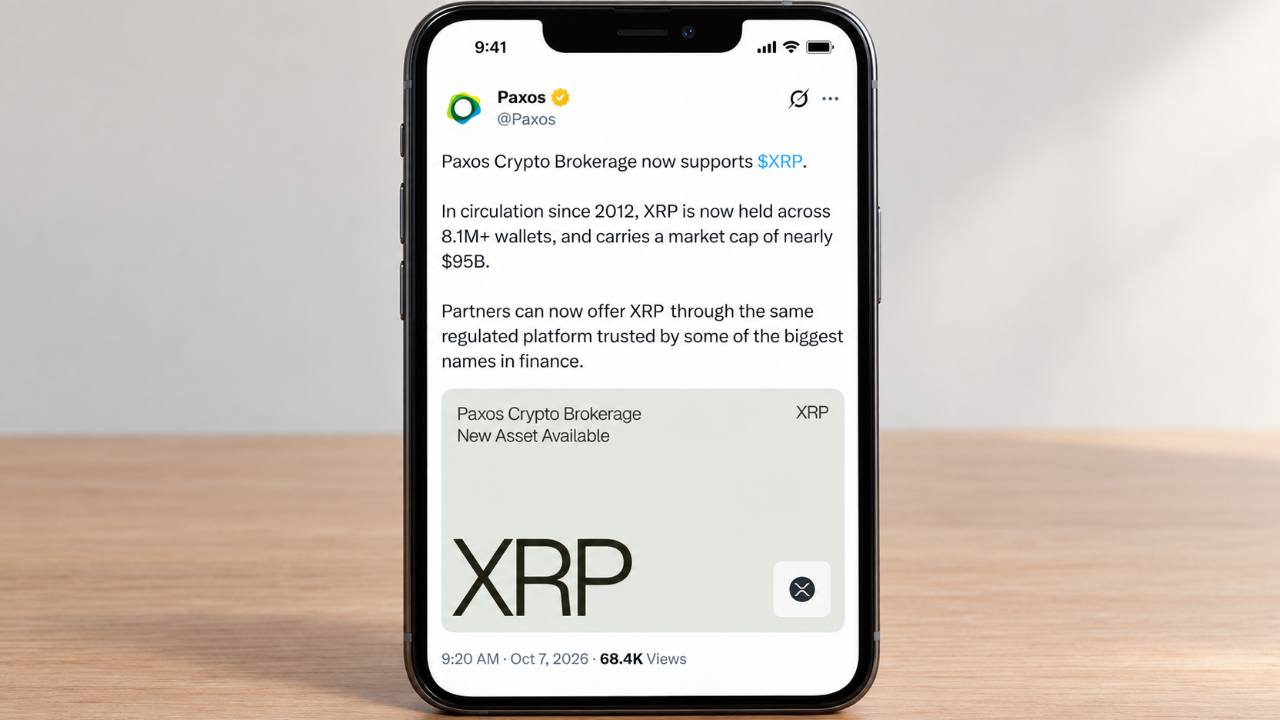
Financial platforms working with Paxos can now offer XRP through its brokerage service, expanding the token’s distribution through regulated infrastructure. Paxos, a provider of blockchain-based financial services, shared its XRP brokerage support on X on Oct. 7. The announcement extends access through businesses that integrate its technology.
Paxos stated:
“Partners can now offer XRP through the same regulated platform trusted by some of the biggest names in finance.”
The cryptocurrency’s existing reach formed part of the announcement, which placed its market capitalization at nearly $95 billion. Paxos also cited holdings across more than 8.1 million wallets in that post. XRP, the native digital asset of the XRP Ledger, has been in circulation since 2012, with payments typically settling in three to five seconds.
The underlying service combines several functions that financial businesses would otherwise need to arrange when introducing digital currency products. Paxos’ crypto trading and custody platform provides safekeeping, connections to liquidity providers that supply buy and sell prices, and monitoring of trade execution, or the completion of orders.
Financial Connections Extend Beyond a Single App
The XRP Ledger Foundation detailed the services available to partners in an Oct. 7 post on X:
“Paxos Crypto Brokerage, the regulated back end used by PayPal, Venmo, Interactive Brokers, Charles Schwab, and Mercado Libre, now supports $XRP. Partners can now offer XRP for buy, sell, hold, deposit, and withdrawal through Paxos Crypto Brokerage.”
Existing arrangements illustrate how responsibilities are divided between an investment firm and its technology provider when a product launches. During Charles Schwab’s retail crypto rollout in May, Paxos completed transactions and provided sub-custody, meaning safekeeping on behalf of the primary custodian. Charles Schwab Premier Bank handled custody and record-keeping. That launch initially covered bitcoin and ether.
The distinction between institutional support and consumer access also extends to how holdings are managed within individual accounts. Cryptocurrency trading and storage may involve a provider safeguarding funds or a user controlling a wallet directly. Each business determines which currencies and transfer functions reach its customers.
Paxos Builds Toward Broader Token Coverage
The company’s regulatory foundation developed before this XRP addition, following federal approval of an application to change its supervisory framework. The Office of the Comptroller of the Currency (OCC), a U.S. banking regulator, conditionally approved Paxos’ national trust bank conversion on Dec. 12, 2025. Paxos now operates under that federal charter, which authorizes its trust activities.
Expansion across networks also followed Paxos’ acquisition of wallet technology company Fordefi, announced in November 2025. The purchase brought tools for managing blockchain wallets into its operations. Paxos subsequently described this technology as helping it safeguard a wider range of tokens, connecting the acquisition with its ability to introduce more cryptocurrencies.
By June 16, Paxos had more than doubled its supported brokerage asset list to 29 tokens, according to Asset Tarabayev, head of brokerage product. Selection involves reviewing demand, available market depth, legal classification, and regulatory history. That June update set a target of covering much of the top 50 cryptocurrencies by market capitalization by year-end.