Key Takeaways
- Director Graham Stone discussed his new documentary on the 2013 Cyprus banking crisis with Bitcoin.com News.
- In 2013, EU bank bail-ins forced Cypriots to lose up to 50% of savings, driving adoption of non-custodial Bitcoin.
- Stone warns that post-2013 laws in the US and Canada allow banks to seize customer deposits in future crises.
Documentary Insights
To mark the release of a new documentary on the 2013 Cyprus banking crisis and its role in bitcoin’s rise, Bitcoin.com News spoke with director Graham Stone. Stone breaks down how the crisis exposed the manipulation of the banking system by politicians and bankers, and shares his perspective on whether Cypriots, and Westerners at large, are truly prepared for the risk of a bail-in. Below are Stone’s responses to questions.
Bitcoin.com News (BCN): Most people assume their bank deposits are their property, but the legal framework for a bail-in exists in the US, EU, and Canada today. What do you hope viewers take away about the true nature of their bank accounts?
Graham Stone (GS): The most critical realization is that when you hand your cash to a bank, it stops being your legal property. You become an unsecured creditor. You’ve essentially given the bank an uncollateralized loan, and on paper, you’re sitting at the back of the line behind derivative counterparties and secured lenders if things go sideways. Most people think a bank account is like a digital safe deposit box. It’s not. It’s a liability on someone else’s balance sheet.
BCN: When researching the 13-day bank freeze in Cyprus, what was the most surprising or unexpected story you uncovered from everyday citizens?
GS: The “Porsche Lifeboat” completely blew me away. When the government locked down ATMs and blocked international wire transfers, local internal bank transfers somehow stayed active for a brief window. Wealthy account holders realized their digital savings were about to take a 50% haircut, so they went on a frantic panic-buying spree at luxury car dealerships and jewelry stores. They were buying $100,000 Porsches and Audis at full sticker price via local wire transfer—not because they wanted the cars, but because a politician can confiscate a digital number on a screen, while it’s much harder to seize a physical German sports car parked in your driveway.
BCN: Why do you think most people still don’t realize how a bank “bail-in” actually works?
GS: Intention and jargon. The financial sector excels at using dry, bureaucratic euphemisms to mask terrifying realities. “Bail-in” sounds like a harmless technical term, whereas “government-mandated account raid” tells the truth. Beyond the jargon, there’s massive cognitive dissonance. People assume that blatant account confiscation only happens in unstable regimes or third-world dictatorships. They can’t fathom it happening in a modern European Union member state or a Western democracy, so they ignore the legal framework sitting right in front of them.
BCN: Do you think a crisis like Cyprus could happen again in today’s economy?
GS: It’s not a question of if it can happen; it’s a reality that the legal blueprint has already been built for it. Right after Cyprus, Eurogroup President Jeroen Dijsselbloem let slip that Cyprus was the “template.” Shortly after, the EU passed the Bank Recovery and Resolution Directive (BRRD), Canada wrote bail-in language into its federal budget, and the US strengthened the Orderly Liquidation Authority under Dodd-Frank. The legal infrastructure to hair-cut depositors in a systemic collapse isn’t a conspiracy theory—it’s literally written into the books of global banking regulations.
BCN: Do you think Cypriots are better prepared today if another banking crisis hits?
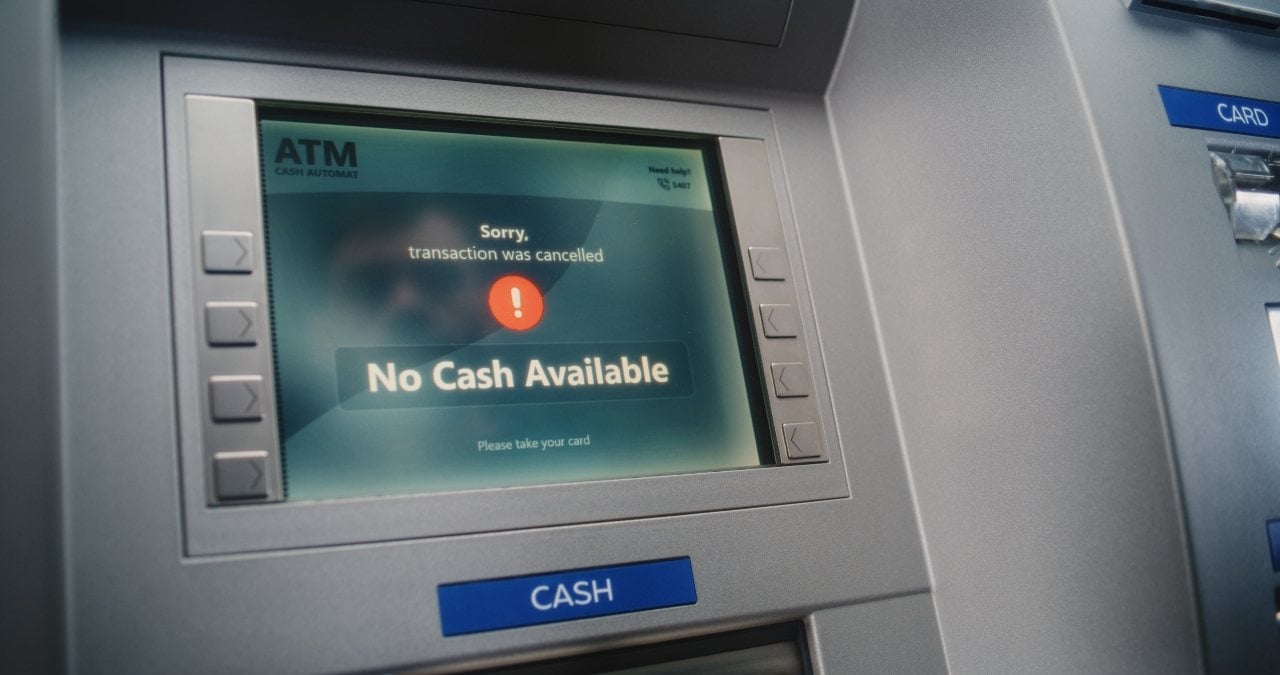
GS: Psychologically and practically, yes. Once you’ve stood in a three-hour line at 6:00 AM only to have an ATM screen flash “Out of Service,” you never trust the system the same way again. Cyprus became a fascinating microcosm for alternative assets after 2013. The University of Nicosia became the first accredited university in the world to accept Bitcoin for tuition, and local awareness of self-sovereign assets skyrocketed.
Cypriots learned the hard way that diversification doesn’t mean having accounts at three different local banks—it means holding assets outside the banking system entirely.
BCN: What is the single biggest takeaway you hope viewers walk away with?
GS: Third-party risk is real, and trust is not a financial strategy. If you don’t control the underlying asset—whether that’s physical cash, gold, or the private keys to your Bitcoin—you are operating on borrowed permission.
BCN: How did making this Cyprus documentary compare to other documentaries you’ve directed?
GS: Our 2008 Lehman Brothers documentary was about systemic macro collapse and the invisible machinery of money printing—it was a story about money losing its value slowly. Cyprus was much more intimate, aggressive, and immediate. It was about people waking up on a random Saturday morning to find their checking accounts padlocked. The human-scale absurdity was off the charts—from the Royal Air Force literally flying in €1 million ($1.16 million) in cash so British troops could buy groceries, to the Bank of Cyprus’s London branches staying open without limits while Nicosia branches were shuttered. It felt less like a macro-economics lesson and more like a psychological thriller.
BCN: Thirteen years after the Cyprus bail-in, how relevant is bitcoin’s core promise of censorship resistance today?
GS: It’s more relevant now than when Satoshi Nakamoto mined the Genesis Block. In 2013, Cyprus proved that banks can seize your money to save themselves. Fast forward to recent years—like Canada freezing the bank accounts of trucker protesters without a court order—and you see that governments can also turn off your money to silence you. Censorship resistance used to be dismissed as a cypherpunk obsession. Today, whether you’re facing a banking crisis, hyperinflation, or political debanking, holding an asset that cannot be frozen, confiscated, or diluted by a middleman is just basic financial risk management.
Though over a decade has passed since Cyprus’s dark crisis, Stone masterfully shows why it still matters today. He urges his audience to prepare and take control of their finances now, rather than wait to become the next victims.